Wildfire Season in Central Oregon: How to Prepare Your Home and Yard
November 3, 2026 · Angie Cox
Living among the ponderosa pines is one of the best parts of calling Central Oregon home. It also comes with a responsibility to prepare for wildfire. A thoughtful evacuation plan, regular home maintenance, and smart landscaping can help reduce risk.
Wildfire preparation matters throughout the region, including established neighborhoods in Bend and Redmond. Forested and rural properties have their own challenges, but homes in town can also be vulnerable to windblown embers. Smoke can affect communities far from an active fire. OSU Extension Service
Whether this is your primary residence or a vacation home you visit throughout the year, here’s where to start.
When is wildfire season in Central Oregon?
There isn’t a fixed start or end date. Fire-season declarations and restrictions depend on weather, fuel conditions, and the agency responsible for the land. Summer and early fall deserve particular attention, but a date on the calendar doesn’t tell you whether burning or other activities are allowed.
Before burning yard debris or doing work that could create sparks, check the current Oregon Department of Forestry restrictions and requirements from your local fire district or land-management agency. oregon.gov
The best time to prepare is before hot, dry conditions arrive. Cooler months are a useful opportunity to plan improvements and address accumulated yard debris.
Start with an evacuation plan
A plan is easier to follow when everyone knows it ahead of time.
- Register for local alerts. Sign up for Deschutes Alerts, and register your property address. If you live elsewhere in Central Oregon, use your county’s emergency notification system.
- Download the Watch Duty app
- Understand evacuation levels. Level 1 means Be Ready, Level 2 means Be Set, and Level 3 means Go Now. Leave earlier if you feel unsafe or need extra time for children, mobility needs, pets, or livestock.
- Prepare a go-bag. Include medications, identification, important documents, chargers, a flashlight, water, clothing, and pet supplies.
- Plan your departure. Identify alternate routes where available, choose a meeting place, and keep your vehicle fueled or charged.
- Plan for animals. Keep carriers and leashes accessible, and arrange transportation and a destination for livestock before an emergency.
Begin with the house and the first five feet
Defensible space is the area around a home managed to reduce the chance of wildfire reaching and igniting it. Start closest to the structure, where small changes can address places embers might collect.
Clean needles and leaves from roofs and gutters, remove debris beneath decks, and address loose or damaged roofing. Keep combustible materials away from siding and deck edges. When planning upgrades, ask a qualified contractor about ember-resistant vents, roofing, siding, and fence connections.
Use these zones to organize the work:
Zone | Distance from the home | Priorities |
|---|---|---|
Immediate | 0–5 feet | Keep this area free of vegetation and combustible materials wherever possible. Use gravel, rock, or pavers instead of bark mulch. Include the area around attached decks. |
Intermediate | 5–30 feet | Maintain separated planting areas, remove dead vegetation, and avoid shrubs beneath tree branches that could carry flames upward. |
Extended | 30–100 feet, or farther where conditions warrant | Reduce accumulated debris and dense vegetation, and obtain guidance on appropriate tree spacing and pruning. |
These are general planning zones. Slope, vegetation, and neighboring conditions affect what a property needs. Work within your property boundaries, and seek site-specific advice from your local fire district or a defensible-space assessor. oregon.gov
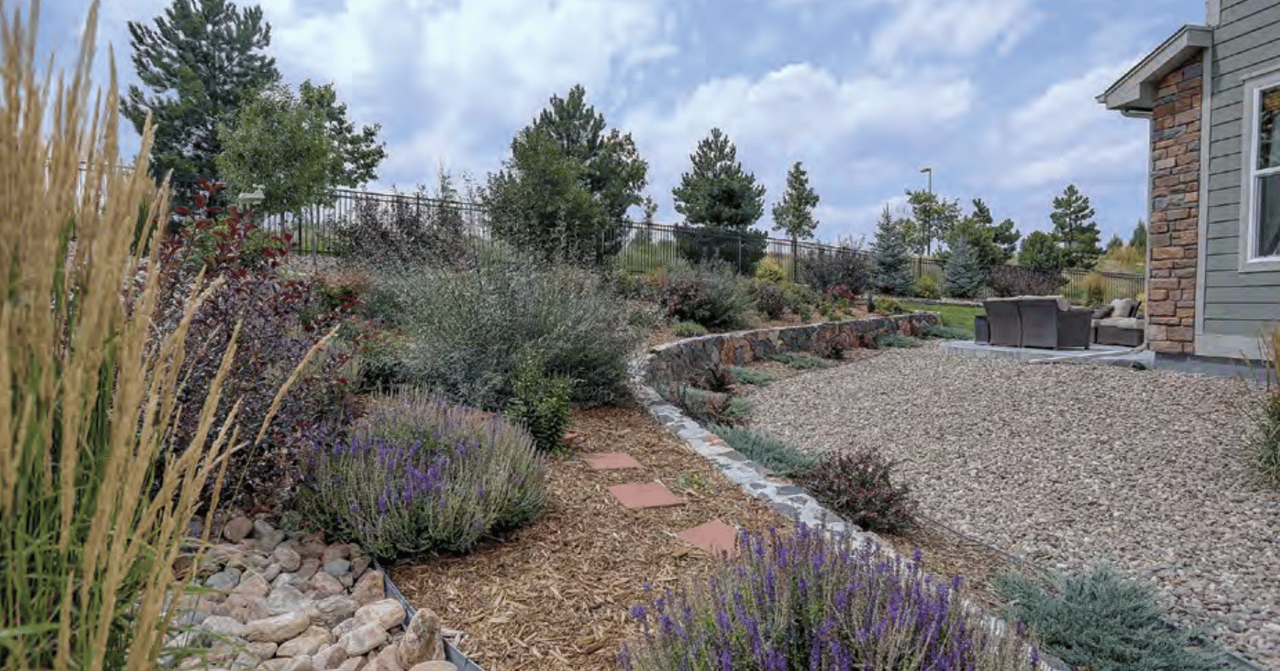
Fire-resistant landscaping can still be beautiful
A thoughtfully planted yard can offer seasonal color, texture, and outdoor living space while reducing fuel near the house.
No plant is fireproof. Placement, spacing, and maintenance matter as much as the plant itself. Look for plants that retain moisture and don’t accumulate large amounts of dead material. Resinous foliage, dry grasses, and dense, twiggy growth require particular attention.
Options to explore for planting beyond the immediate five-foot zone include:
- Groundcovers: creeping thyme and sedum.
- Perennials: yarrow, penstemon, and blanket flower.
- Shrubs: serviceberry, golden currant, and red-twig dogwood.
- Deciduous trees: suitable varieties of maple or quaking aspen, where space and growing conditions allow.
Check the specific species or cultivar against OSU Extension’s Fire-Resistant Plants for Home Landscapes. Choose for Central Oregon’s cold winters, sun exposure, irrigation needs, and mature plant size.
Keep up with seasonal maintenance
Regular upkeep helps prevent a carefully designed landscape from becoming a collection of dry fuel.
- Remove dead material. Clear fallen needles, leaves, branches, and dried plant growth, especially near structures.
- Maintain plant health. Irrigate appropriately for the species and local watering requirements.
- Keep grasses managed. Mow lawns, remove dry weeds, and address invasive annual grasses such as cheatgrass.
- Prune thoughtfully. Keep vegetation from touching siding or overhanging roofs. Have an arborist assess larger trees rather than removing branches indiscriminately.
- Check debris-disposal options. FireFree offers seasonal collection opportunities. Confirm current dates, participating sites, accepted materials, and fees before loading up. Free and discounted disposal arrangements can vary.
Have a second home or vacation rental?
Wildfire preparation needs a local plan when you aren’t here.
Arrange regular property checks and seasonal cleanup with a trusted local contact or property manager. Make sure someone can identify new debris buildup, irrigation problems, or maintenance needs between visits.
For a vacation rental, keep emergency instructions easy to find. Include the property’s address, official alert resources, evacuation information, and a local contact. Guests may be unfamiliar with the area, so clear instructions are especially useful.
Buying or selling a home in Central Oregon? I can help you identify property-maintenance questions to explore and connect you with local resources for a closer look. Book a Call with Angie.